Dog vaccines: what the law requires and when
In Bulgaria exactly one dog vaccine is required by law — rabies. It can be given from 12 weeks of age, is repeated every 12 months, and may only be administered after the dog has been microchipped and issued a passport.
- A puppy gets its first vaccine at 6 – 8 weeks, the second at 10 – 12, and the third — together with rabies — at 14 – 16 weeks. It can go out freely about two weeks after the third.
- The combination vaccine against distemper, hepatitis, parvovirus and parainfluenza is not written into law, but it counts as core — recommended for every dog regardless of lifestyle.
- Bordetella, Lyme disease and canine influenza are a judgement call: contact with other dogs, boarding kennels, walks in the woods.
- Every vaccination is recorded in the passport and in VetIS, the Bulgarian Food Safety Agency system, so keeping to schedule matters administratively as well as medically.
What the law requires
These requirements come from the Veterinary Medical Activities Act and apply to every dog in the country, house dogs included. The deadlines below are the owner’s obligations.
- from 6 weeksThe owner presents the dog to a veterinarian for a passport, deworming and vaccination. This is the first contact with the official system.
- before rabiesA microchip with a unique 15-digit code is implanted. The rabies vaccine is only recorded after marking — the other order is not accepted.
- from 12 weeksThe earliest age for a rabies vaccine. In practice the first dose falls between the third and sixth month.
- by 4 monthsThe dog is registered with a veterinarian. For a dog acquired later in life, the deadline is 7 days from taking it in.
- at 12 monthsRabies revaccination. Each subsequent dose is given 12 months after the previous one — a missed deadline breaks validity.
- before travelTo leave the country, at least 21 days must pass between the rabies vaccine and the journey.
All of the above is recorded in VetIS, the information system of the Bulgarian Food Safety Agency. The paper passport and the electronic record must agree.
Three different things people mix up
"Required", "core" and "recommended" do not mean the same thing. The difference matters both for a fine and for the conversation with your vet.
Rabies only
The only vaccine the state requires for a dog. Annual, recorded in VetIS, mandatory even for a dog that never leaves the yard.
- Rabies — every year, from 12 weeks of age
Recommended for every dog
Not in the law, but they protect against the diseases with high mortality. Given as a single combination vaccine.
- Distemper
- Infectious hepatitis
- Parvovirus
- Parainfluenza
- Leptospirosis
Based on the individual risk
These make sense for a particular routine. Your vet judges whether they are needed from where and with whom the dog lives.
- Bordetella — boarding kennels, shows, dog parks
- Lyme disease — frequent walks in woods and long grass
- Canine influenza — where many dogs gather
Vaccine schedule by age
The usual puppy series. Exact dates depend on when the first dose was given and which vaccines the practice uses — the schedule is set by the vet, not by the calendar.
| Age | What is given | What to keep in mind |
|---|---|---|
| 6 – 8 weeks | First vaccine: combination | Usually given by the breeder or vet shortly after weaning. Maternal antibodies are fading but still interfere with the vaccine — hence the repeats. |
| 10 – 12 weeks | Second vaccine: combination + leptospirosis | The second dose builds real immunity. The gap from the previous one is 3 – 4 weeks, no less. |
| 14 – 16 weeks | Third vaccine: combination + rabies | Rabies is possible from 12 weeks at the earliest. After this dose the puppy is protected and can move freely outdoors. |
| at 1 year | Revaccination: combination + rabies | The first annual booster consolidates the immunity built during puppyhood. |
| every year | Rabies required; combination per product | Rabies is annual by law. Some combination vaccines carry three-year protection — the interval follows the product and the vet’s judgement. |
Common questions about dog vaccines
Are dog vaccines mandatory in Bulgaria?
By law only the rabies vaccine is mandatory — every year, for every dog, including one that never leaves the yard. The combination vaccine against distemper, hepatitis, parvovirus and parainfluenza is not written into the law, but it is recommended for every dog and given essentially everywhere. The rest depend on lifestyle.
When are the first, second and third puppy vaccines given?
The first vaccine — the combination one — is given at 6 – 8 weeks, before the puppy changes home. The second is at 10 – 12 weeks, 3 – 4 weeks after the first, with leptospirosis added. The third is at 14 – 16 weeks, together with the rabies vaccine, which is possible from 12 weeks at the earliest. A booster follows at one year.
When is the rabies vaccine given to a dog?
From 12 weeks at the earliest, with the first dose usually falling between the third and sixth month. It is given only after a microchip has been implanted and a passport issued. Each subsequent vaccination is 12 months after the previous one.
Where is the vaccine injected in a dog?
Subcutaneously, usually at the neck or between the shoulder blades, where the skin is loose and the injection is tolerated most easily. It is given by a veterinarian at the practice or on a home visit; the site and the batch number are recorded in the passport.
What happens if I miss the annual rabies vaccine?
Validity lapses and the dog officially counts as unvaccinated. There are three practical consequences: it cannot travel abroad until a new vaccination plus 21 days, most boarding kennels and shows will refuse it, and the owner is in breach of the Veterinary Medical Activities Act. After a long lapse the vet may ask for the series to be repeated.
After which vaccine can a puppy go outside?
After the third — the last of the puppy series, at 14 – 16 weeks — plus about two more weeks while protection builds. So a puppy can go out freely at around 16 – 18 weeks. Until then, avoid places where dogs gather and unfamiliar faeces — parvovirus survives in soil for months. Carrying the puppy and contact with known vaccinated dogs are safe and matter for socialisation.
How long before travelling abroad must a dog be vaccinated?
At least 21 days between the rabies vaccine and the journey. The clock runs from the date of vaccination, not from the issuing of the passport, and applies to a first vaccination — where the vaccine is renewed on time, protection is continuous and no wait is required.
Dates are not remembered — they are recorded
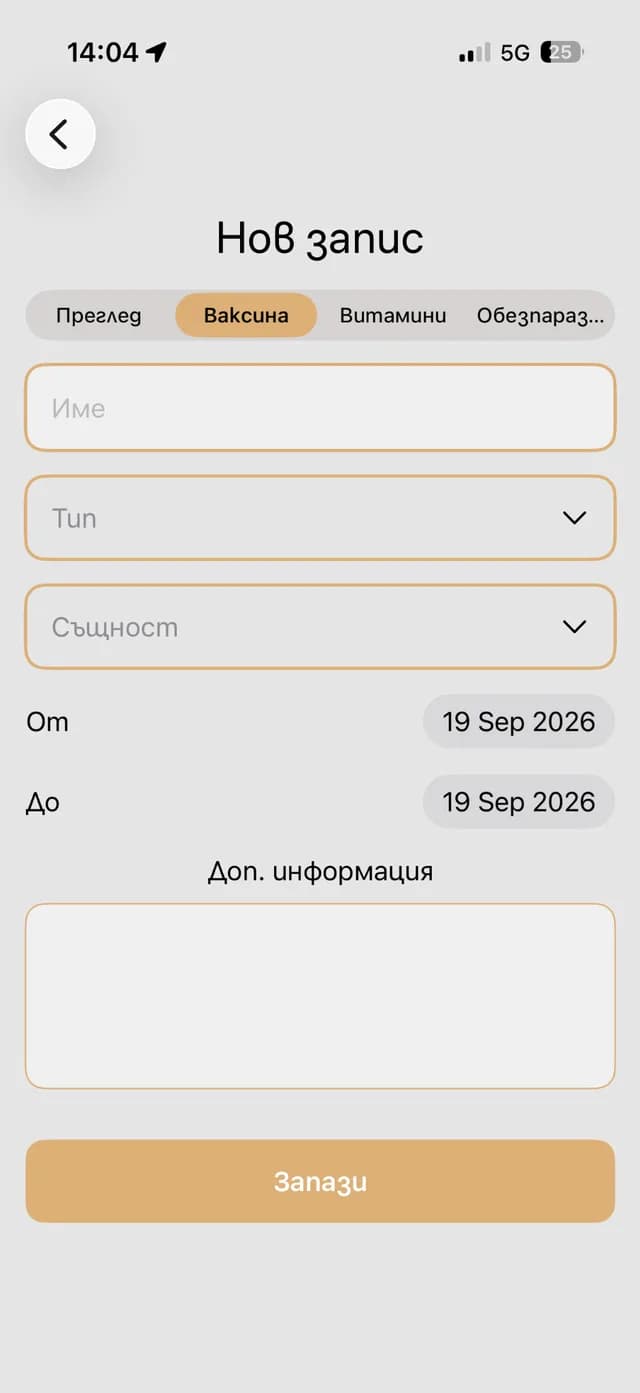
The annual rabies shot, the three puppy doses and the boosters drift by a few weeks every year. In PetsClub you record each vaccine with its date and batch number, and the next due date arrives as a reminder on its own.
- A reminder before each vaccine expires, not on the day it is due
- A separate record per dog, with the full vaccination history
- Health record export as PDF — for the vet, a kennel or travel